


Jihadists Kill 15 Farmers, Children In Hunger-stricken Northeast Nigeria: Sources. August 1st, 2025
- Ana Cunha-Busch
- Jul 31, 2025
- 3 min read
By AFP - Agence France Presse
Jihadists Kill 15 Farmers, Children In Hunger-stricken Northeast Nigeria: Sources
By Aminu ABUBAKAR
IS-affiliated militants killed over a dozen farmers and children in a gun attack and mine explosion in Nigeria's northeast Borno state, the epicentre of jihadist conflict, two anti-jihadist militia members told AFP Friday.
Fighters from Islamic State West Africa Province (ISWAP) opened fire on a group of farmers and children riding in an open van and a motorised rickshaw outside Gurnowa, a village near the garrison town of Monguno, on Thursday, the militias said.
Separately, a woman farmer and her three children fleeing the area died when their wooden cart hit a landmine planted by the jihadists near the attack scene before they withdrew, the militia said.
"Our men have evacuated 11 bodies to Monguno while another team has left to bring the woman and her three children," said Babakura Kolo, an anti-jihadist militia leader assisting the military in fighting the jihadists in the region.
The 11 were returning to Monguno after working on their farms when they were attacked by the jihadists, said Ibrahim Liman, another member of the militia who gave the same toll.
The insurgents made off with the van and the rickshaw of the slain farmers, the two militia said.
"The woman and her three children had abandoned their farm in hearing gunshots and were heading back to Monguno when the cart they were pushing rolled over an explosive buried by the terrorists, killing them all," Liman said.
From the images of the 11 victims seen by an AFP reporter, most were shot in the head, including two females and two children.
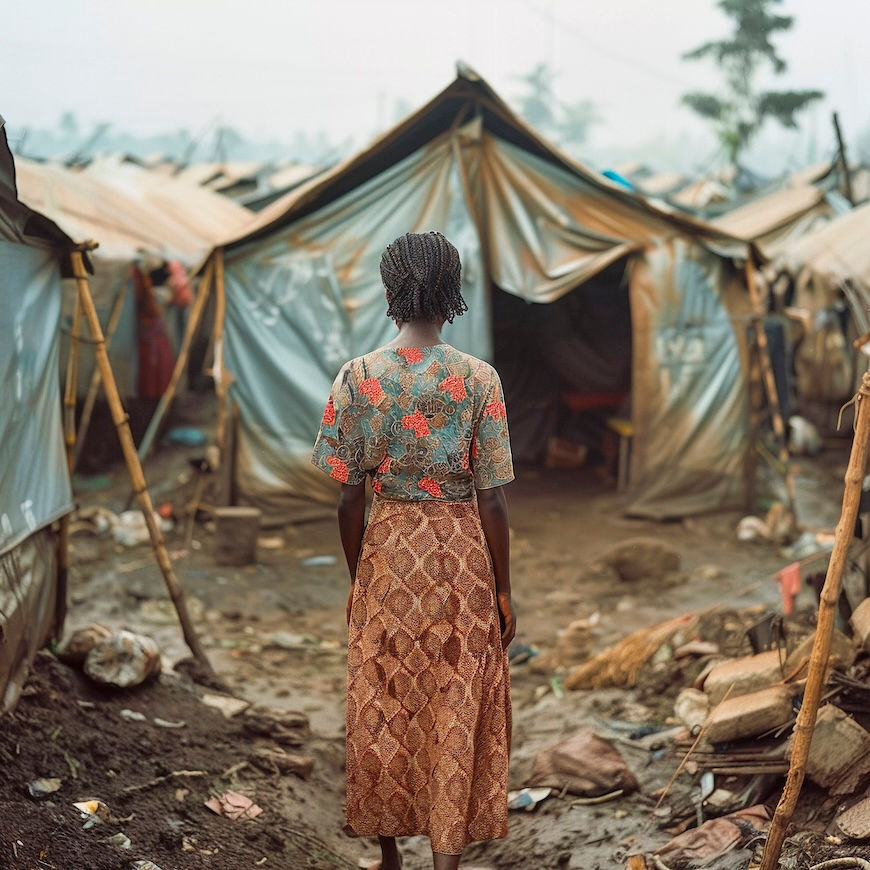
Gurnowa, five kilometres (three miles) from the military fortified town of Monguno, has been deserted for years following jihadist attacks, with its inhabitants forced to seek shelter in makeshift camps in Monguno.
Monguno, 140 km north of the regional capital Maiduguri, has been barricaded for the past four years to ward off attacks.
It houses tens of thousands of internally displaced people, who fled their homes to escape the violence and live in sprawling camps under military protection.
The United Nations says more than a million people will face hunger in northeastern Nigeria amid resurgent jihadist attacks, huge cuts in foreign aid, and a spiralling cost of living.
The 16-year conflict has killed more than 40,000 people and displaced more than two million from their homes, according to the UN.
The World Food Programme said last month that its emergency food aid programme would grind to a halt by July 31 due to "critical funding shortfalls".
WFP said its food and nutrition stocks "have been completely exhausted", with its Nigeria country director, David Stevenson, warning that when emergency assistance ends, people will migrate in search of food.
"Others will adopt negative coping mechanisms -- including potentially joining insurgent groups -- to survive," warned Stevenson.
The Borno state government has, since 2018, been returning the displaced people to their homes despite concerns of humanitarian aid agencies over the risk of jihadist violence.
The government argued that displaced camps were no longer sustainable and the displaced should return home and rebuild their lives with government support.
Babagana Umara Zulum, the Borno state governor, has recently renewed calls for the displaced to return to their farms to grow food in the rainy season that started in June.
abu/sn/kjm


Comments