


Why Greenland is an indispensable pillar for global climate science REPORTAGE FEB 4, 2026
- Ana Cunha-Busch
- Feb 3
- 2 min read
Why Greenland is an indispensable pillar for global climate science
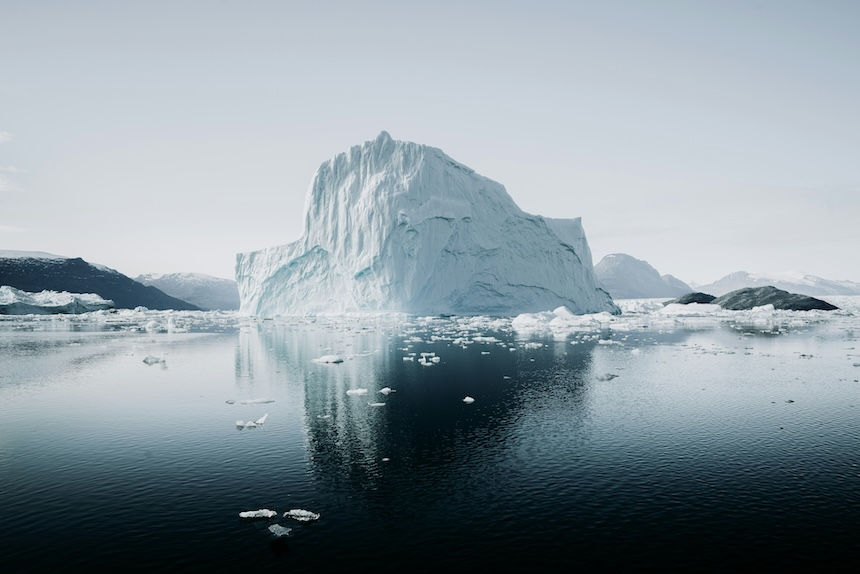
Greenland, with its vast ice sheet, is becoming the epicenter of climate science. It is not just a geographical landmark, but a natural laboratory that records the past, reveals the present, and projects the future of climate change.
Scientists have drilled into Greenland's ice to extract what are known as "ice cores"—cylinders of ice that preserve climate information dating back hundreds of thousands of years. These cores show, for example, that CO₂ and methane levels, affected by ancient air bubbles, are closely correlated with temperature changes.
Recent data is alarming. Since 1995, central Greenland has warmed by 1.5 degrees Celsius—an unprecedented increase. This warming has accelerated, driving the rapid melting of the ice sheet. Since 1992, Greenland has lost nearly 3,900 gigatons of ice, contributing about 10.8 millimeters to global sea level rise.
This global sea level rise impacts not only Greenland's coastline but also vulnerable cities worldwide. Thus, Greenland's future is intrinsically linked to global climate outcomes.
In addition to ice, Greenland also possesses rare minerals, essential materials for green technologies such as batteries and wind turbines. This makes Greenland crucial not only for climate records but also for sustainable innovation.
Therefore, what happens in Greenland reverberates globally, impacting the Amazon and other regions. Understanding these processes is fundamental for formulating policies that protect both coastal communities and the ecosystems that make up the planet.
The Green Amazon News – International
This text was compiled using public data, scientific reports, and information from meteorological institutions.
The Green Amazon News — All rights reserved.


Comments